The Machine
Book One
Prophecy arrives on scorched cards. Algorithms preach. Confession machines turn numbers into names. A child is monitored like an asset.
Complete Trilogy · Production Ready
When a dying inventor leaves a scorched prediction naming a monitored child and the phrase THE LAST PRESIDENT, a dynasty, a court, and a country must decide whether Baren Sump is prophecy, evidence, or simply a boy who refuses to remain available.

Three books · one sealed case file
Series Architecture
Continuous chapter numbering from Prologue through Chapter 84. A single case file that moves from prophecy and spectacle to protection, accountability, and refusal.
Book One
Prophecy arrives on scorched cards. Algorithms preach. Confession machines turn numbers into names. A child is monitored like an asset.
Book Two
Protection ends. The Look-Away Ledger opens. Other children appear—not as symbols, but as court identifiers. Accountability becomes architecture.
Book Three
The black path is not escape—it is availability withdrawn. Ordinary life makes its claim. The future does not wait. That is all.
The Trilogy
Not a chosen-one fantasy. A literary political thriller where children are monitored like assets, language becomes a weapon of state, and ordinary life can be the quietest victory.
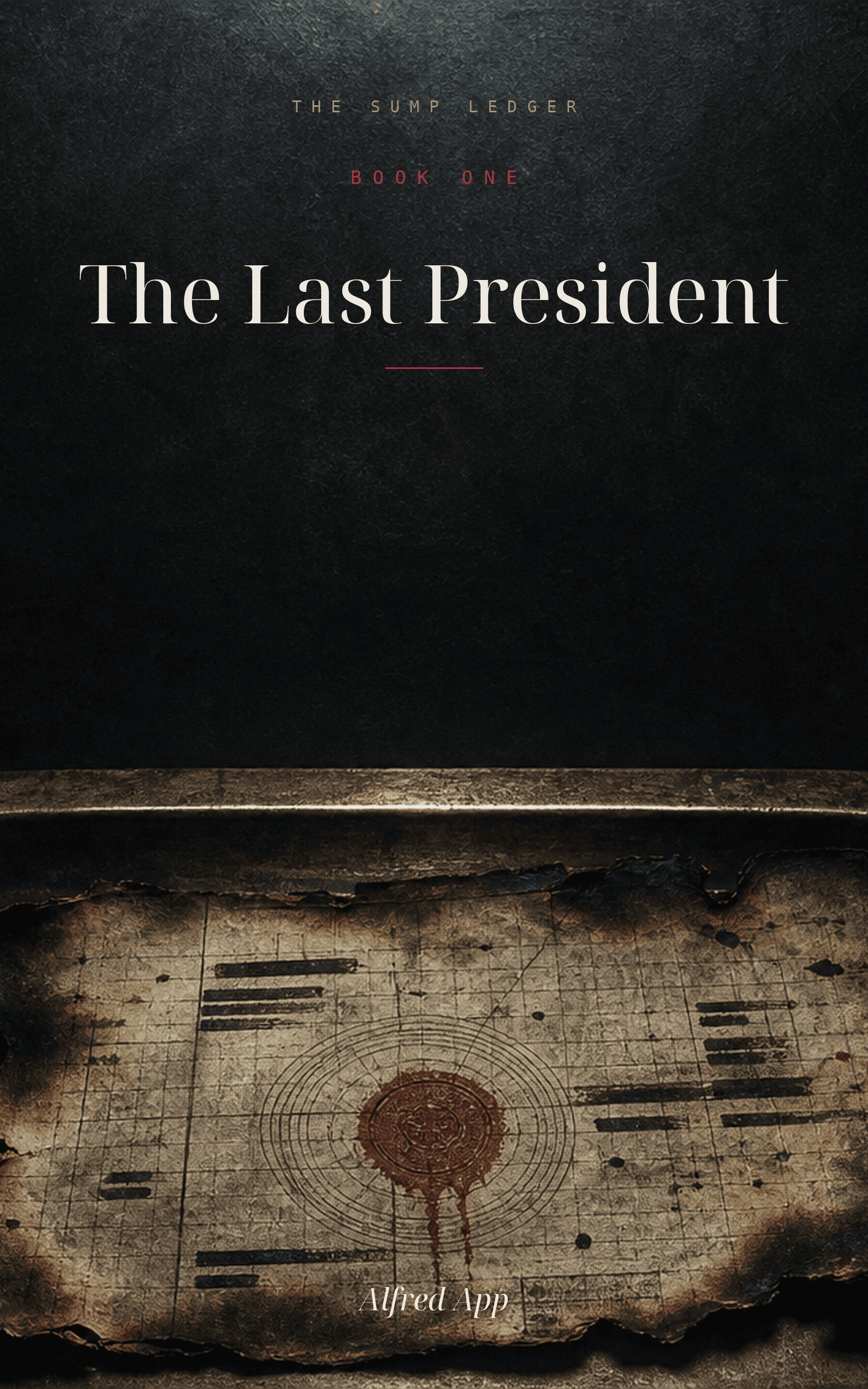
“Every accusation is advertising.”
Build the machine
When inventor Nikola Veyra dies in a storm that obeys no natural law, he leaves a prediction card scorched with impossible names. What follows is not a chosen-one fable but a case file: algorithms that preach, families that buy tomorrow, confession machines that turn numbers into names, and a child who learns that being watched is not the same as being protected.
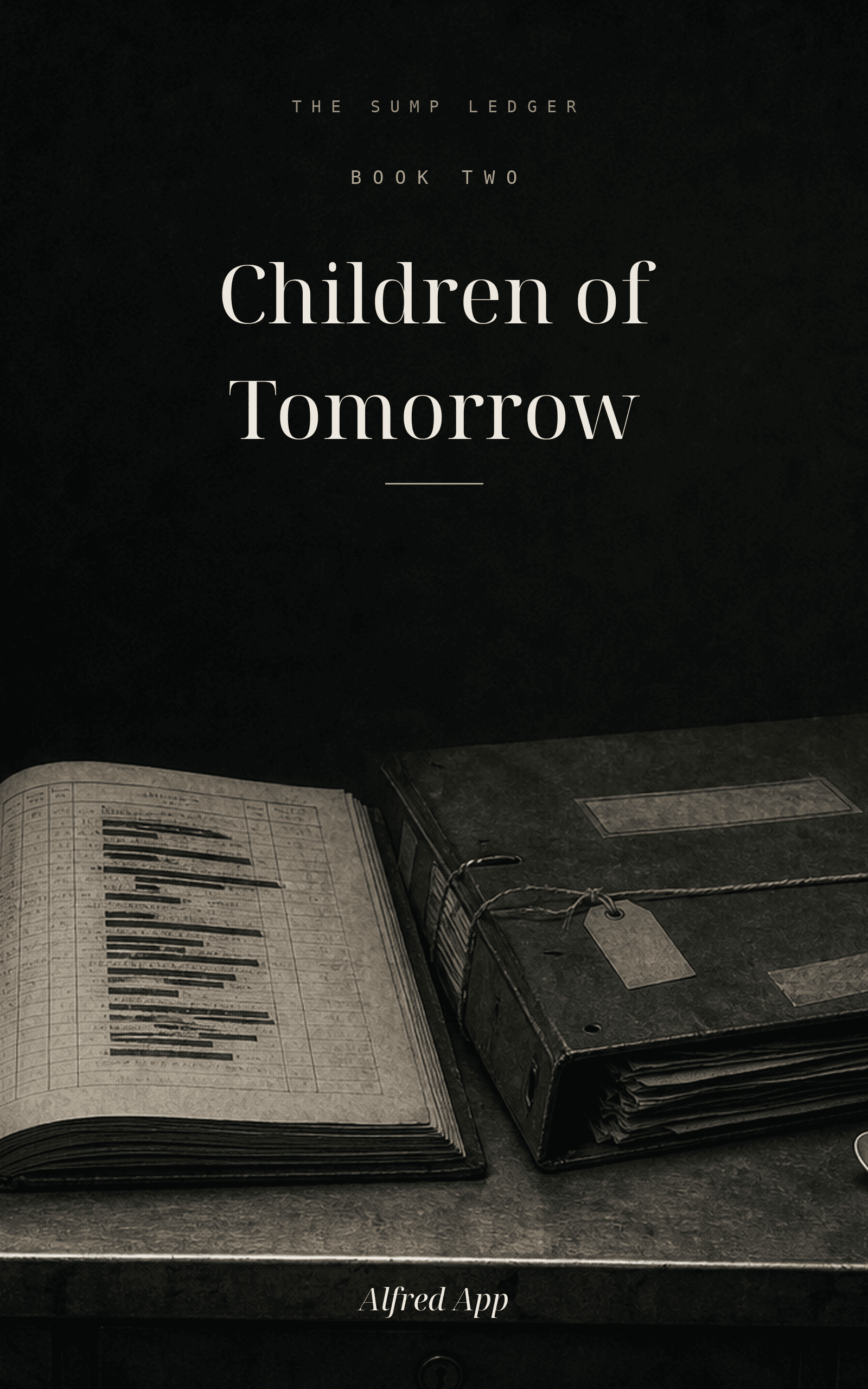
“Children are not evidence.”
Who looked away
Baren learns about a grounded plane from a cereal box. The Look-Away Ledger, the RAF-One archive, and a map of who looked away turn one child's story into a system story. Courts without windows. Adults who were almost brave. Seven court identifiers. Never names.
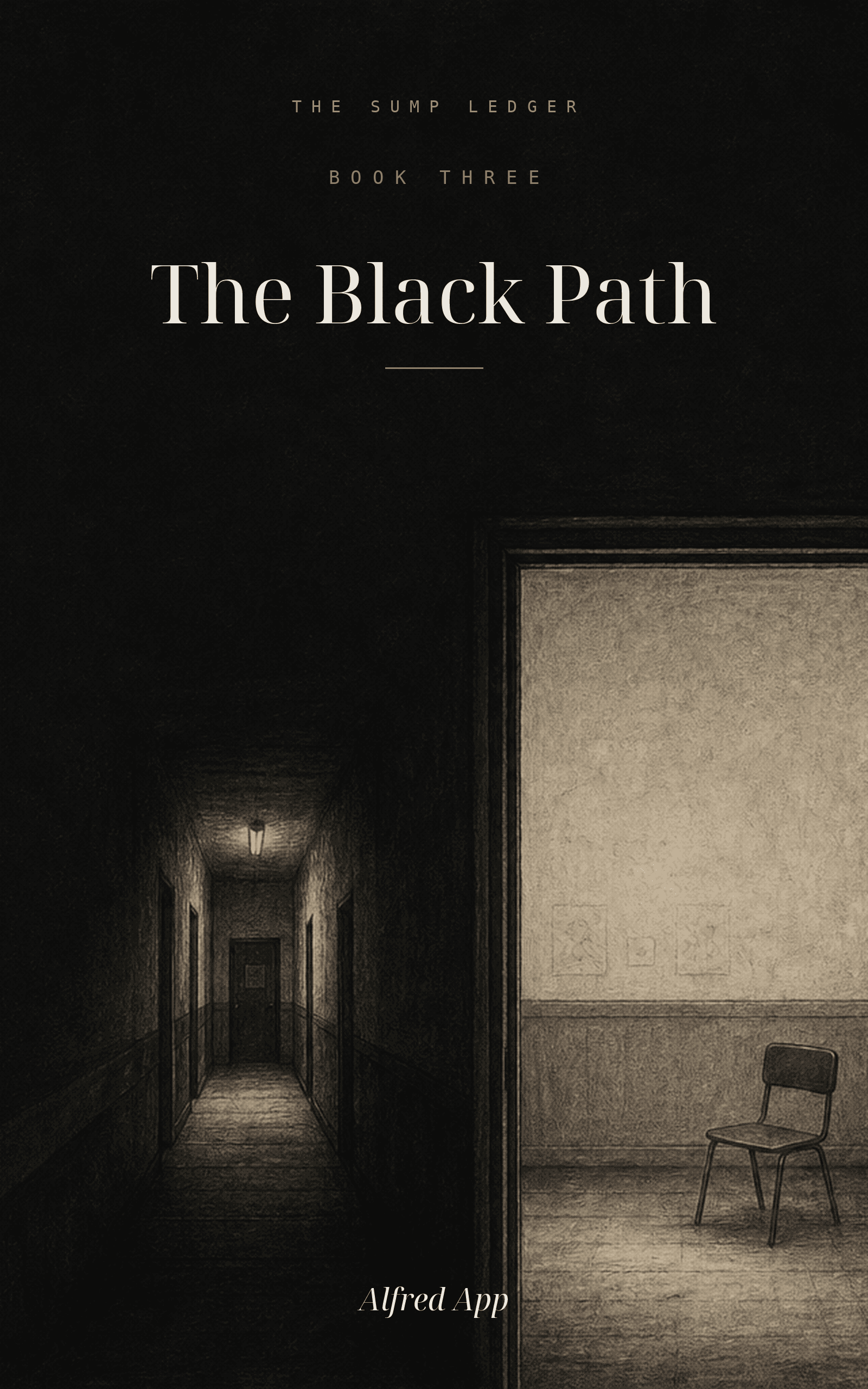
“Some days refused to become evidence.”
Refusal as freedom
The black path is not a tunnel—it is a refusal. Baren will not remain available as proof, witness, remedy, or adult repair tool. Book Three compresses toward a quiet ending: ordinary remains enough. No crowned climax. No child-saving-the-world turn.
Exhibits
Every image in this world is found, logged, or sealed — never merely illustrated. A child is never shown. Only the rooms, the objects, and the shadows left behind.


From the Record
Every accusation is advertising.
Book One · Chapter Four
Children are not evidence.
Book Two · controlling sentence
Some days refused to become evidence.
Book Three · Chapter Fifty-Five
Protection had saved him. Protection had also grown hands.
Book Three · Chapter Fifty-Five
He gets to choose his own face.
Book Two · Interlude
And all, for once, did not ask to be everything.
Book Three · final chapter
The Case File
Predictions arrive on scorched cards. Confession machines turn numbers into names. A boy named like an empty field sits at the center—monitored, priced, and never chosen.
Book One builds the machine. Book Two opens the Look-Away Ledger and asks who looked away. Book Three walks the black path: a refusal to remain available to every hand that calls itself safe.
The art treats every image as recovered evidence—pencil sketches, exhibits, sealed records. Baren is never shown as magical, heroic, or chosen.
For readers who love
Stay in the Ledger
Launch updates, excerpt releases, review copies, and rights inquiries. Distribution coming soon.